
Sewing Machines – the heart of every garment factory. What types are there and what are they used for?
At our garment factory located in Łódź, we have been specializing for years in the contract manufacturing of lightweight apparel. The key to high-quality craftsmanship lies not only in a team of experienced seamstresses but also in a state-of-the-art machine park. Sewing machines are the foundation of efficient, precise, and consistent garment production—especially in the lightweight clothing segment, where both aesthetics and functionality are crucial.
In this article, we present the types of sewing machines we use in our daily operations, their functions, and how they contribute to sewing precision and finishing quality.
Types of Sewing Machines and Their Applications
- Lockstitch Machine (Straight Stitch Machine)
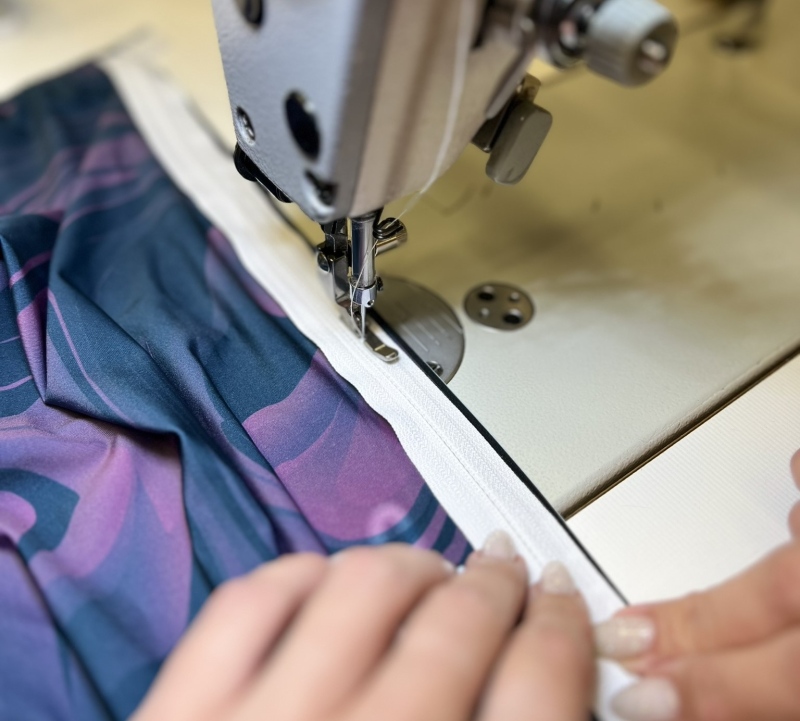
This is the most common type of sewing machine, used for sewing straight, single-needle seams.
- Applications: Straight stitching – e.g., T-shirts, zipper insertion
- Advantages: Versatility, precision, suitable for various fabric types
- Limitations: Cannot perform stretch (elastic) stitches
- Overlock Machine (Serger)
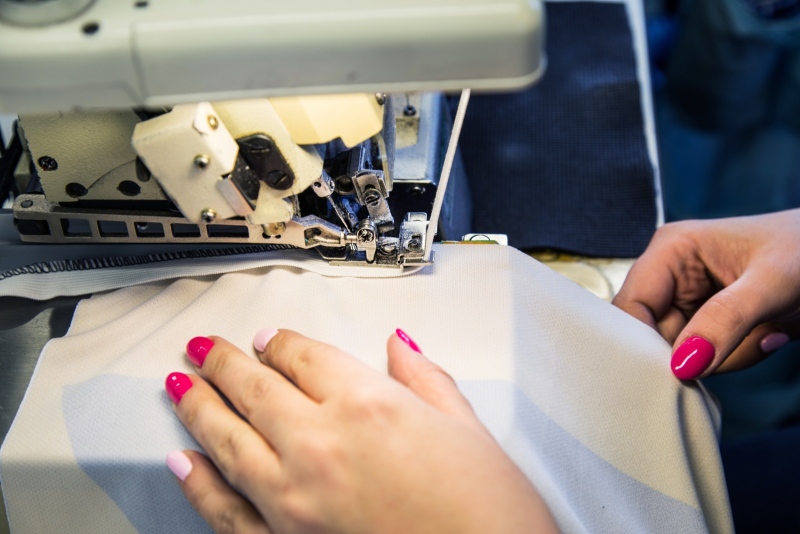
Used for clean and durable edge finishing to prevent fabric fraying.
- Applications: Serging and seaming of knits and lightweight woven fabrics
- Advantages: Elastic seams, high speed, professional finish
- Limitations: Requires proper thread tension adjustment
- Coverstitch Machine (Coverlock)
Primarily used for hemming T-shirt bottoms, sleeves, and performing decorative topstitching.
- Applications: Elastic stitches, hemming, stitching knitwear
- Advantages: Stretch-resistant seams, clean professional look
- Limitations: Slightly more complex to operate compared to an overlock
- Button and Buttonhole Machines
Specialized automatic machines for sewing buttons and creating buttonholes.
- Applications: Polo shirts, blouses, sweatshirts
- Advantages: Speed and consistency, neat finish
- Limitations: Limited to specific operations
- Flatseamer (Autolap)
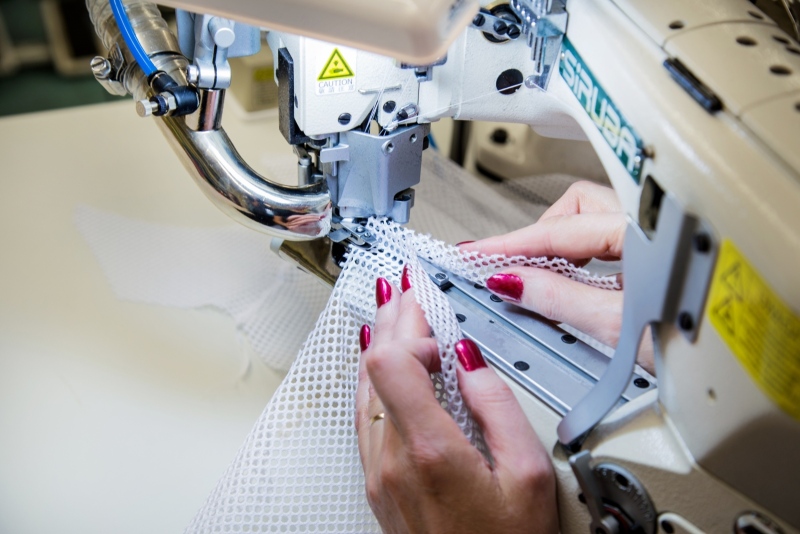
A specialized machine that produces flatlock seams, commonly used in sportswear, lingerie, and technical knitwear. The seam is not only aesthetically pleasing but also non-chafing and stretch-resistant.
- Applications: Activewear, thermal underwear, seamless lingerie, flat seams in knits
- Advantages: Highly elastic seams, comfort for the wearer, modern appearance
- Limitations: Requires precise settings and experienced operators
- Bartack Machine
An automatic machine that reinforces stress points with short, dense stitches (bar tacks), such as pocket corners, fly openings, or belt loops.
- Applications: Reinforcing loops, pockets, zipper ends, garment slits
- Advantages: Strengthens key garment areas, increases production speed
- Limitations: Dedicated to specific reinforcement tasks, not for general stitching
- Zigzag Machine (CAK)
A zigzag stitch machine that enables wavy stitch formation. It is ideal for finishing elastic edges, decorative stitching, or joining fabrics that cannot be sewn with a straight stitch.
- Applications: Elastic edge finishing, decorative topstitching, appliqués
- Advantages: Flexible stitching, adjustable stitch width
- Limitations: Not suitable for standard joining seams
- Three-Step Zigzag (Triple Zigzag Stitch)
An advanced version of the zigzag stitch where the needle makes three penetrations in each direction, creating a more durable and stretchable seam. Perfect for attaching elastics or finishing stretch elements.
- Applications: Inserting elastic bands, binding edges, lingerie, swimwear, children’s apparel
- Advantages: Highly stretchable and durable stitch, excellent for fine knits
- Limitations: Slower stitching speed, higher thread consumption
How do we choose sewing machines for lightweight garment production?
Manufacturing lightweight garments requires not only precision but also delicacy. Lightweight and thin fabrics such as Lycra or cotton are more prone to damage or distortion, not to mention their elasticity. That’s why our factory places strong emphasis on:
- Selecting the appropriate needles and threads
- Adjusting machine tension and settings
- Performing regular equipment maintenance
- Using machines with modern control systems
Modern technologies in garment manufacturing – automation and precision
Today’s sewing machines are increasingly equipped with electronic control systems, thread tension sensors, and automatic thread trimming. These technologies enhance production efficiency and the finishing quality of each garment component.
Why do we invest in a modern machine park?
At our factory, we believe that well-chosen sewing machines are not just tools—they are a guarantee of quality. Thanks to our investment in machinery, we can offer our clients:
- High repeatability and stitching precision
- Durable and visually appealing finishes
- Production flexibility – from small batches to large-scale runs
- Fast order fulfillment with no compromise on quality
Conclusion
Sewing machines are indispensable in every garment facility—whether small or large-scale. Their diversity, functionality, and technical capabilities allow for the production of high-quality lightweight clothing. With the right machine selection and a skilled workforce, we are able to meet the expectations of even the most demanding clients.
If you're looking for a reliable partner in sportswear manufacturing—feel free to contact our garment factory. Together, we can create something exceptional.